How to Apply for NDIS in 2026: Step-by-Step Eligibility, Documents & Approval Tips
Applying for the National Disability Insurance Scheme (NDIS) can feel overwhelming at first, especially if you are unsure about eligibility, documents, timelines, or where to begin. The good news is that understanding the process step by step can make it much easier.
The NDIS is designed to support Australians living with a permanent and significant disability by funding services that help improve independence, participation, and quality of life. This may include personal care, therapy, transport support, accommodation assistance, community access, and more.
In this guide, we explain how to apply for NDIS in 2026, who may be eligible, what documents you need, how long approval can take, and practical tips to improve your chances of success.
What Is the NDIS?
The National Disability Insurance Scheme (NDIS) is an Australian government-funded program that provides support to eligible people with disability.
The aim of the NDIS is to help participants:
- Build independence
- Access therapy and support services
- Improve daily living skills
- Participate in work, study, and community life
- Reach personal goals
If approved, you receive an NDIS plan with funding based on your needs and goals.
Who Is Eligible for NDIS in 2026?
To apply for NDIS in 2026, you generally need to meet these key criteria.
Age Requirement
You must be under 65 years old when applying.
Residency Requirement
You must live in Australia and be:
- An Australian citizen
- Permanent resident
- Protected Special Category Visa holder
Disability Requirement
You must have a permanent disability that significantly affects your ability to complete everyday activities such as:
- Mobility
- Communication
- Self-care
- Learning
- Social interaction
- Independent living
Early Intervention Requirement
Some people may qualify if early support can reduce future needs or improve long-term outcomes.
Conditions That May Qualify for NDIS
Eligibility depends on functional impact, not just diagnosis. Conditions may include:
- Autism spectrum disorder
- Intellectual disability
- Cerebral palsy
- Multiple sclerosis
- Acquired brain injury
- Spinal cord injury
- Psychosocial disability
- Neurological conditions
- Vision or hearing impairments
Even if you have a diagnosis, you still need evidence showing how it impacts daily life.
Step-by-Step: How to Apply for NDIS in 2026
Step 1: Check Your Eligibility
Before applying, review the age, residency, and disability requirements.
If unsure, speak with your GP, allied health professional, or Local Area Coordinator.
Step 2: Gather Supporting Documents
Strong evidence is one of the most important parts of the application.
Common documents include:
- Medical reports
- Diagnosis letters
- Functional capacity assessments
- Occupational therapist reports
- Physiotherapy reports
- Psychology reports
- Specialist letters
- Hospital discharge summaries
- Support worker statements
- School reports (if relevant)
These should explain both your diagnosis and how it affects daily life.
Step 3: Complete an Access Request
Applications are commonly made through an NDIS Access Request process.
You may be able to apply by:
- Calling the NDIS
- Submitting forms online
- Getting support through a Local Area Coordinator
- Using a health professional to assist with evidence
Step 4: Submit Evidence
Attach all supporting documents with the application.
The more clearly your evidence explains functional limitations, the stronger the application.
Step 5: Wait for Assessment
The NDIA reviews your application and supporting evidence.
They may:
- Approve the application
- Request more evidence
- Ask clarifying questions
- Decline if criteria are not met
Step 6: Receive Outcome
If approved, you move into planning where goals, supports, and budgets are discussed.
You then receive your first NDIS plan.
What Documents Do You Need for NDIS?
The best evidence usually focuses on daily limitations, not just diagnosis.
Essential Documents
- Photo ID
- Medicare details
- Residency proof
- Medical diagnosis reports
- Recent treatment history
Strong Supporting Evidence
- Functional assessments
- Therapy reports
- Care needs statements
- Behaviour support evidence
- Communication challenges reports
Helpful Tip
Recent reports are usually stronger than old reports.
How Long Does NDIS Approval Take in 2026?
Approval times vary depending on complexity and completeness of evidence.
Many applicants may wait:
- Several weeks for straightforward applications
- Longer if more documents are needed
- Longer for complex disability evidence reviews
Submitting complete evidence early can reduce delays.
Common Reasons Applications Are Delayed or Rejected
Understanding common issues can improve success.
Weak Functional Evidence
Diagnosis alone may not be enough.
Outdated Reports
Old documents may not reflect current needs.
Missing Information
Unclear reports or incomplete forms can slow the process.
Condition Not Considered Permanent Yet
If treatment outcomes are still uncertain, more evidence may be needed.
Tips to Improve Your Chances of Approval
1. Focus on Daily Impact
Explain how disability affects:
- Dressing
- Cooking
- Transport
- Communication
- Working
- Social participation
- Managing routines
2. Use Professional Reports
Reports from OTs, psychologists, specialists, and therapists are valuable.
3. Be Specific
Instead of saying “needs help,” explain what help is needed and how often.
4. Include Safety Risks
Mention falls, fatigue, supervision needs, wandering risks, behavioural risks, or medication management issues where relevant.
5. Keep Evidence Current
Recent reports are usually more persuasive.
What Happens After Approval?
Once approved, you will discuss goals and support needs. Depending on circumstances, funding may include:
- Support workers
- Therapy services
- Community participation
- Transport supports
- Assistive technology
- Supported Independent Living
- Short Term Accommodation
- Community nursing
Need Temporary Support While Waiting?
Some participants and families explore respite or accommodation supports after plan approval.
Learn more about Short Term Accommodation (STA) and support options through Accessible STA.
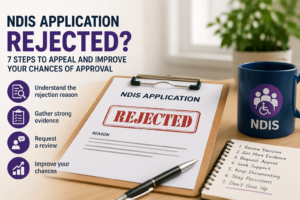
What If Your NDIS Application Is Rejected?
A rejection does not always mean the end of the process.
You may be able to:
- Request reasons for the decision
- Gather stronger evidence
- Submit updated reports
- Seek advocacy support
- Request a review depending on circumstances
Frequently Asked Questions
Can I Apply Without a Diagnosis?
Usually, strong medical evidence is required. A diagnosis often supports the process.
Can Mental Health Conditions Qualify?
Some psychosocial disabilities may qualify if they significantly affect functioning and are ongoing.
Can Children Apply?
Yes, children may access supports depending on needs and eligibility pathways.
Is There an Income Test?
The NDIS is generally not means-tested like some other support systems.
Final Thoughts
Applying for NDIS in 2026 can feel complex, but the right preparation makes a big difference. Focus on clear evidence, current reports, and explaining how disability impacts everyday life.
A strong application is not about using complicated language. It is about accurately showing the support you need.
If approved, the right supports can create more independence, stability, and quality of life.
Explore More Support Options
If you already have an NDIS plan or are preparing for future supports, explore Accessible STA for guidance on accommodation and disability support services.
Visit the Accessible & Short Term Accommodation to learn more about available support options.