Receiving a rejection for your NDIS application can be disappointing and frustrating, especially when you believe you genuinely need disability support. However, a declined application does not necessarily mean you will never qualify for the National Disability Insurance Scheme (NDIS).
Many applications are rejected because of insufficient evidence, incomplete documentation, or a lack of information demonstrating how a disability affects daily life. In many cases, applicants can strengthen their evidence, request a review, and successfully access NDIS support.
This guide explains why NDIS applications are rejected, the steps you can take to appeal a decision, and how to improve your chances of approval in 2026.
Understanding Why NDIS Applications Are Rejected
Before appealing, it is important to understand why the application was unsuccessful.
The NDIS assesses whether applicants meet eligibility criteria under the National Disability Insurance Scheme Act. Approval is based not only on a diagnosis but also on the impact that a disability has on everyday functioning.
Common reasons for rejection include:
- Insufficient medical evidence
- Lack of functional assessments
- Missing documentation
- Disability not considered permanent
- Disability not considered significant enough under NDIS criteria
- Incomplete application forms
- Limited evidence showing impact on daily life
Understanding the reason for the decision will help determine the most effective next steps.
What Happens After an NDIS Application Is Rejected?
If your application is declined, the National Disability Insurance Agency (NDIA) will generally provide a written explanation outlining why the decision was made.
Do not ignore this document.
The information provided can help identify gaps in your application and guide your appeal strategy.
In many situations, applicants who provide stronger supporting evidence during the review process achieve a different outcome.
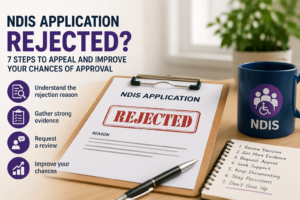
Step 1: Carefully Review the Decision Letter
The first step is to read the rejection notice thoroughly.
Pay attention to:
- The eligibility criteria that were not met
- Any concerns raised by the NDIA
- Missing evidence identified in the assessment
- Recommendations for further documentation
Understanding the specific reasons behind the decision is critical before gathering additional evidence or requesting a review.
Questions to Ask Yourself
- Did I provide enough evidence?
- Were my reports recent?
- Did my documents explain how my disability affects daily life?
- Were any important medical reports missing?
The answers can reveal weaknesses in the original application.
Step 2: Request Detailed Reasons if Necessary
Sometimes applicants receive a general explanation that does not provide enough detail.
If you are unsure why your application was rejected, you can request further clarification from the NDIA.
Obtaining a clearer understanding of the decision helps ensure your appeal addresses the correct issues rather than guessing what may have gone wrong.
Step 3: Gather Stronger Supporting Evidence
One of the most common reasons applications fail is because the evidence focuses on diagnosis rather than functional impact.
The NDIS wants to understand how a disability affects your ability to perform everyday activities.
Strong supporting evidence may include:
- Specialist reports
- Occupational therapy assessments
- Functional capacity assessments
- Psychology reports
- Physiotherapy reports
- Speech pathology reports
- Behaviour support reports
- Medical specialist letters
The strongest reports clearly explain:
- Daily challenges
- Support requirements
- Long-term impact
- Functional limitations
- Safety concerns
- Barriers to independence
The more detailed the evidence, the stronger your case becomes.
Step 4: Demonstrate Functional Impact Clearly
Many applicants assume a diagnosis alone is enough.
However, NDIS eligibility is largely based on how your condition affects daily functioning.
Evidence should explain difficulties with:
- Personal care
- Dressing
- Showering
- Meal preparation
- Mobility
- Communication
- Learning
- Social participation
- Community access
- Managing appointments
- Maintaining employment
Real-life examples often strengthen the evidence significantly.
For example, rather than stating that mobility is difficult, a report may explain that the person requires assistance to travel independently or experiences a high risk of falls.
Step 5: Request an Internal Review
If you believe the decision was incorrect, you may be able to request an internal review.
An internal review involves a different NDIA decision-maker reassessing the original decision.
During this process:
- Additional evidence can be submitted
- New reports can be included
- Clarifications can be provided
- Functional impacts can be explained more thoroughly
Many applicants achieve a better outcome when they provide stronger evidence during this stage.
Step 6: Seek Professional Support
Navigating the review process can feel overwhelming, especially when dealing with complex medical information.
Support may be available from:
- Disability advocates
- Support coordinators
- Community legal services
- Allied health professionals
- NDIS specialists
These professionals can help identify gaps in your evidence and ensure reports align with NDIS eligibility requirements.
Professional guidance can often make the process easier and more effective.
Step 7: Continue Building Evidence
If additional evidence is required, continue documenting how your disability affects daily life.
Helpful evidence may include:
- Updated medical assessments
- Specialist appointments
- Therapy reports
- Functional assessments
- Support worker observations
- Incident reports
- Hospital records
Building a comprehensive picture of your support needs can significantly improve future applications and reviews.
Common Mistakes to Avoid During an Appeal
Many applicants unintentionally weaken their case by making avoidable mistakes.
Focusing Only on Diagnosis
The NDIS is interested in how a disability affects everyday life, not just the diagnosis itself.
Using Outdated Reports
Older assessments may not accurately reflect current support needs.
Submitting Limited Evidence
Providing only one medical letter is often insufficient.
Ignoring Functional Capacity Assessments
These assessments can provide valuable evidence about independence, mobility, communication, and daily living challenges.
Missing Deadlines
Review requests should be submitted within applicable timeframes.
How Long Does the NDIS Appeal Process Take?
Timeframes can vary depending on:
- Complexity of the case
- Volume of supporting evidence
- Review workload
- Additional information requests
Some reviews are resolved relatively quickly, while more complex cases may take longer.
Keeping documentation organised can help reduce delays.
Can You Reapply for NDIS After a Rejection?
In some circumstances, individuals may choose to submit a new application if they have obtained substantial new evidence since the original decision.
This may be appropriate when:
- New diagnoses have been made
- Additional functional assessments are available
- Support needs have increased
- More comprehensive evidence exists
The best approach depends on individual circumstances.
Related Reading: Understanding the NDIS Application Process
If you are still learning about eligibility requirements, read our guide on How to Apply for NDIS in 2026: Step-by-Step Eligibility, Documents & Approval Tips. Understanding the original application process can help identify areas that may need strengthening during a review.
Final Thoughts
Having an NDIS application rejected can be discouraging, but it does not always mean the process is over. Many applicants successfully challenge decisions by understanding the reasons for rejection, strengthening their evidence, and clearly demonstrating the impact of their disability on everyday life.
The key to improving your chances of approval is providing detailed, current, and functional evidence that accurately reflects your support needs.
With the right documentation and approach, you may be able to achieve a more positive outcome and access the support necessary to live more independently and participate fully in your community.
Frequently Asked Questions
Does a Rejected NDIS Application Mean I Am Not Eligible?
Not necessarily. Some applications are declined because evidence does not clearly demonstrate eligibility requirements. Additional evidence may lead to a different outcome.
Can I Submit New Evidence During a Review?
Yes. New medical reports, assessments, and supporting documents may strengthen your case.
What Is the Most Important Evidence for NDIS Approval?
Evidence that clearly explains how your disability affects daily functioning is often the most valuable.
Should I Get an Occupational Therapy Assessment?
Functional capacity assessments conducted by occupational therapists can be highly beneficial when demonstrating support needs.