How NDIS Funding Works: A Simple Guide to Budgets, Categories, and Plan Management
Understanding how NDIS funding works is essential for participants and families navigating the National Disability Insurance Scheme. A clear understanding of budgets, support categories, and plan management helps participants make informed decisions and maximise their funding.
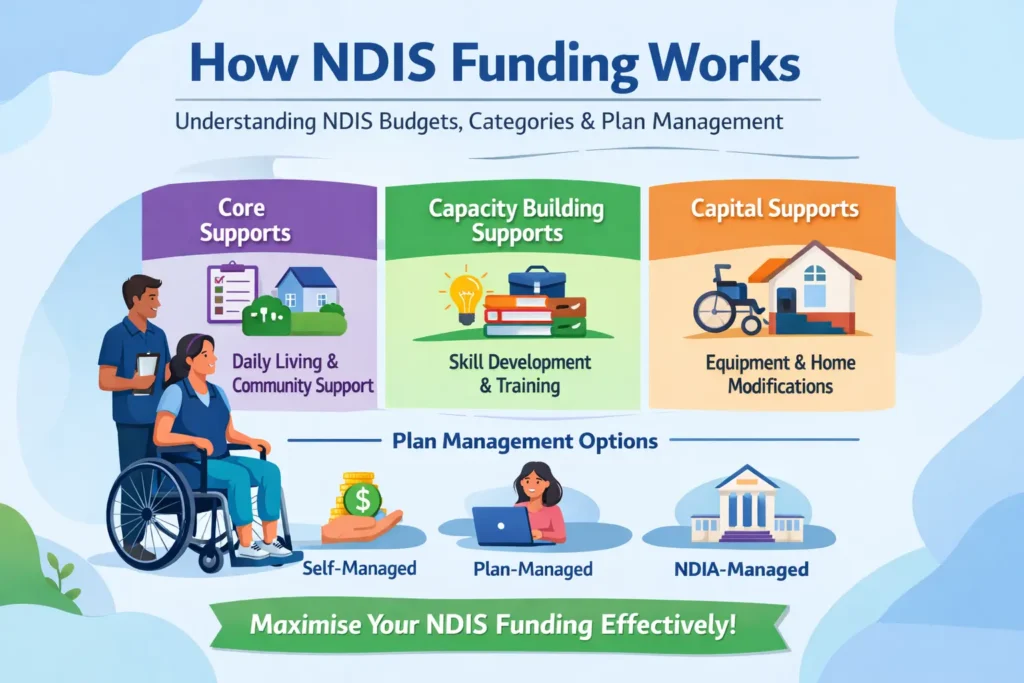
NDIS funding is provided through an individualised plan that includes budgets across Core Supports, Capacity Building Supports, and Capital Supports. Each category is designed to support independence, skill development, and participation in everyday life.
How NDIS Funding Works
NDIS funding is allocated after an assessment process where the participant’s disability-related needs, goals, and daily support requirements are evaluated.
Once approved, participants receive a personalised NDIS plan with funding for supports considered reasonable and necessary. These supports aim to improve independence, increase community participation, and enhance overall quality of life.
Most NDIS plans are valid for 12 months. During this period, participants can access services using their allocated budgets.
The Three Main NDIS Funding Categories
NDIS funding is divided into three primary categories, each serving a specific purpose.
1. Core Supports
Core Supports help participants manage daily activities and maintain their current lifestyle.
- Personal care and daily assistance
- Household tasks and cleaning
- Community participation activities
- Transport support
- Support workers
This category offers the highest flexibility, allowing participants to adjust spending across services based on their needs.
2. Capacity Building Supports
Capacity Building Supports focus on developing skills for long-term independence. Funding is usually allocated to specific areas.
- Support coordination
- Life skills training
- Employment support
- Therapy and behaviour support
- Education and skill development programs
These supports help participants build confidence and improve their ability to manage everyday life independently.
3. Capital Supports
Capital Supports fund essential investments that improve accessibility and independence.
- Assistive technology and equipment
- Home modifications
- Specialist Disability Accommodation
- Mobility aids and adaptive devices
Funding in this category is typically restricted to approved items and cannot be used flexibly.
Understanding NDIS Budgets
Each funding category contains specific budgets or line items that define how funds can be used.
- Daily support services fall under Core Supports
- Skill development programs fall under Capacity Building
- Equipment and modifications fall under Capital Supports
Participants can track their budgets through the NDIS participant portal or with the help of a support coordinator or plan manager. Effective budget management ensures funding lasts throughout the plan duration.
NDIS Plan Management Options
Participants can choose how their NDIS funding is managed. Each option offers different levels of control and flexibility.
1. Self-Managed Plans
Participants manage their own funding, including payments, invoices, and records. This option provides maximum flexibility and access to a wider range of providers.
2. Plan-Managed Funding
A plan manager handles financial administration, including payments and tracking budgets. Participants still retain control over service choices.
3. NDIA-Managed Plans
The National Disability Insurance Agency pays providers directly. Participants must use registered NDIS providers.
Using NDIS Funding for Support and Accommodation
NDIS funding can be used to access a wide range of supports based on participant goals.
- Short-term accommodation for temporary support
- Medium-term accommodation while waiting for permanent housing
- Supported Independent Living for ongoing daily assistance
Participants exploring structured living arrangements may also consider
Individualised Living Options as part of their long-term housing strategy.
Tips for Making the Most of Your NDIS Funding
- Set clear and measurable goals
- Track spending regularly
- Work with experienced support providers
- Request plan reviews when needs change
- Focus on supports that build long-term independence
Quick Summary
- NDIS plans include personalised budgets based on individual needs
- Funding is divided into Core, Capacity Building, and Capital Supports
- Each category serves a specific purpose
- Participants can choose how their plan is managed
- Strategic planning helps maximise funding outcomes
Frequently Asked Questions
What are the main NDIS funding categories?
The three main categories are Core Supports, Capacity Building Supports, and Capital Supports.
How long does an NDIS plan last?
Most NDIS plans are valid for 12 months, although some may vary depending on individual circumstances.
Can I change how my NDIS plan is managed?
Yes, participants can request changes to their plan management option during a plan review.
What is the most flexible NDIS funding category?
Core Supports are generally the most flexible, allowing participants to allocate funds across different services.