
NDIS Capacity Building Supports: How They Empower Participants for Independent Living
Living independently is one of the most important goals for many NDIS participants. Achieving this requires more than daily assistance. It requires the right skills, confidence, and long-term support strategies. NDIS Capacity Building Supports are designed to help participants develop these essential capabilities.
This guide explains how Capacity Building funding works, the types of supports available, and how participants can use it to improve independence, decision-making, and overall quality of life.
What Are NDIS Capacity Building Supports?
NDIS Capacity Building Supports help participants build skills and capabilities to achieve long-term goals. Unlike Core Supports, which focus on daily assistance, Capacity Building focuses on learning, development, and independence.
- Improve ability to live independently
- Enhance employment readiness
- Increase social and community participation
- Build confidence in managing supports
- Develop problem-solving and decision-making skills
NDIS Support Categories Explained
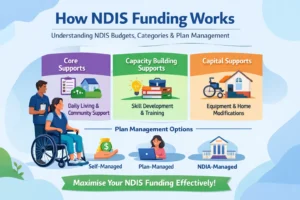
- Core Supports for daily activities, consumables, and transport
- Capital Supports for assistive technology and home modifications
- Capacity Building Supports for skill development and long-term independence
Types of NDIS Capacity Building Supports
1. Support Coordination
Helps participants understand their plan, connect with providers, and manage supports effectively.
2. Improved Living Arrangements
Assists in finding and maintaining suitable housing aligned with independence goals.
3. Increased Social and Community Participation
Supports skill development for engaging in social, recreational, and community activities.
4. Finding and Keeping a Job
Provides employment support such as resume building, interview preparation, and workplace training.
5. Improved Relationships
Focuses on communication skills, emotional regulation, and building positive relationships.
6. Improved Health and Wellbeing
Includes supports such as exercise physiology, mental health programs, and nutrition guidance.
7. Improved Learning
Helps participants pursue education, training, and skill development aligned with career goals.
8. Improved Life Choices
Supports plan management, budgeting, and financial decision-making.
9. Improved Daily Living
Includes therapy and training for everyday skills such as cooking, cleaning, and routine management.
Capacity Building vs Core Supports
| Feature | Core Supports | Capacity Building Supports |
|---|---|---|
| Purpose | Daily assistance | Skill development |
| Focus | Maintaining lifestyle | Improving independence |
| Examples | Personal care, transport | Therapy, training |
| Flexibility | Flexible | Category-based |
How to Access Capacity Building Supports
- Review your NDIS plan
- Choose providers aligned with your goals
- Participate in training and programs
- Track progress and adjust goals
Participants exploring different living arrangements can also consider options such as Individualised Living Options as part of their independence planning.
Conclusion
NDIS Capacity Building Supports help participants build skills, confidence, and independence over time. With clear goals and the right support, participants can improve their quality of life and achieve long-term outcomes.
Frequently Asked Questions
What are Capacity Building Supports in NDIS?
Capacity Building Supports are services that help participants develop skills and independence to achieve long-term goals.
How are they different from Core Supports?
Core Supports help with daily needs, while Capacity Building focuses on long-term skill development.
Can all participants access these supports?
Most participants can access them depending on their plan goals and supporting evidence.